


Summer brings longer days, more time outside and often a packed schedule of training, hacking and competitions. However, warmer weather also creates additional challenges for horses, with increased sweating, changes in routine, travelling and exercise all placing extra demands on their bodies.
With the right preparation, owners can help their horses stay comfortable, hydrated and able to cope with the heat. Understanding how to cool a horse effectively, when conditions are suitable for exercise and how to recognise early signs of heat stress can make a significant difference during the warmer months.
Cooling Your Horse Effectively After Exercise
Advice around cooling horses has evolved, and some traditional methods have now been replaced by evidence-based approaches.
One of the most effective ways to reduce body temperature after exercise is the continuous application of cool water. Once your horse has finished work, remove tack promptly, move them somewhere shaded if possible, encourage airflow and apply cool water continuously until their breathing and heart rate begin to return towards normal.
A common misconception is that water should be scraped away after applying it. However, allowing water to remain on the coat helps support the cooling process. As water evaporates, it draws heat away from the body in a similar way to how sweat cools humans. Removing the water too quickly can reduce this benefit.
Instead, continue applying fresh cool water as it warms, allowing a thin layer to evaporate naturally, particularly where there is airflow.
Encouraging Hydration During Hot Weather
Cooling from the outside is only part of the process — maintaining hydration is equally important.
It’s also worth thinking about encouraging drinking, not just cooling from the outside. A “water buffet” – offering several buckets with different additions such as a little soaked feed, or a hindgut supplement for horses like Equell Gut Food which is rich in natural herbs and botanicals – gives your horse options and can encourage more consistent drinking, while also supporting gut health during a season when routines are often disrupted. Always make sure you have plain, clean, fresh water available alongside any water buffet options.
Knowing When It Is Safe to Ride
Temperature alone does not determine how challenging conditions are for horses. Humidity is also a major factor, as it affects how effectively sweat can evaporate and cool the body. Take a look at this handy Guide from Equell:
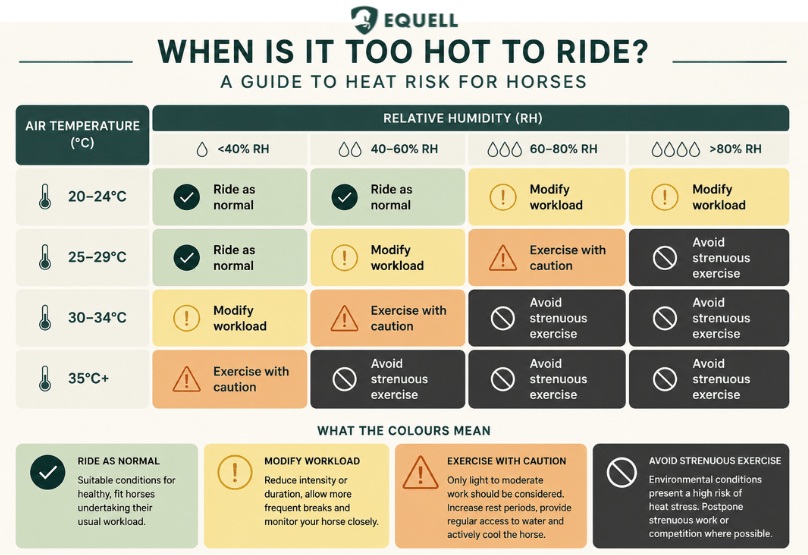
The combination of temperature and humidity is known as the Heat Index, which provides a better indication of the level of heat stress a horse may experience.
As a general guide:
- When temperatures rise above approximately 32°C and humidity exceeds around 70%, the risk of heat stress increases significantly.
- High humidity reduces the effectiveness of sweating, meaning horses may struggle to regulate their body temperature even when conditions feel manageable to humans.
Horses are particularly vulnerable to overheating because exercise generates significant internal heat through active muscle, while their body design limits how efficiently they can lose heat compared with humans.
Where possible:
- Exercise during cooler parts of the day, such as early morning or later evening.
- Choose shaded areas where available.
- Reduce intensity during periods of extreme heat or humidity.
- Allow additional recovery time after work.
- Encourage drinking before and after exercise.
Travelling also adds to heat load. Lorries and trailers can become warm quickly, making good ventilation and access to water essential before, during and after journeys.
Heat index guidance should always be used as a guide rather than a strict rule. Fitness level, acclimatisation, wind, cloud cover and workload all influence how an individual horse copes with heat. If conditions feel unsuitable, it is always better to adjust plans.
Recognising the Signs of Heat Stress
Most horses adapt well to warmer conditions, but recognising early warning signs allows owners to act before problems become serious.
Look out for:
- Excessive or prolonged sweating
- Rapid breathing
- Slow recovery after exercise
- Lethargy or reluctance to work
- Reduced appetite
- Poor performance
- Changes in behaviour
If you notice these signs, stop exercising, move your horse somewhere cooler, provide fresh drinking water and begin active cooling using the continuous-water method.
If your horse does not improve or you are concerned about their condition, seek veterinary advice promptly.
Why Electrolytes Matter in Summer
While cooling techniques and exercise timing often receive the most attention, maintaining the correct electrolyte balance is also essential.
Sweating causes horses to lose important minerals, including:
- Sodium
- Potassium
- Chloride
- Magnesium
These electrolytes play a role in maintaining hydration balance and supporting normal body function. When levels become depleted, a horse’s natural thirst response can be affected, potentially reducing their ability to replace lost fluids.
Providing electrolytes during warmer months, particularly around strenuous exercise, travelling and competition, helps replace minerals lost through sweating and supports effective rehydration.
Simple Steps for a Safer Summer
Managing horses in hot weather does not need to be complicated. The basics remain the most important:
- Provide constant access to clean, fresh water
- Use effective cooling methods after exercise
- Plan work around the hottest parts of the day
- Replace electrolytes lost through sweating
- Monitor your horse closely for changes
By putting these simple measures in place, owners can help their horses cope with summer conditions and continue enjoying everything the season has to offer.